

API 560 Fired Heaters Training
Maximize Your API 560 Fired Heaters Design Knowledge With Practical Examples From a 50-year Expert
9th - 11th December - Hilton Garden Inn, Sugar Land, TX
About your Instructor
Ashutosh Garg brings to this course more than 50 years of experience in design, engineering, and troubleshooting of fired heaters and combustion systems for the refining and petrochemical industries.
He graduated from the Indian Institute of Technology, Kanpur, India, in chemical engineering in 1974. He started as a graduate engineer in an ammonia plant. This was followed by six years at KTI India and eight years at EIL, New Delhi, in the heater group. He joined KTI Corporation, San Dimas, California, in May 1990, and moved to KTI Houston in 1992.
He has published several papers on fired heaters and burners. He has conducted many webinars in the past five years. He is a registered professional engineer and a member of AIChE, ASME, API subcommittee of heat transfer equipment.

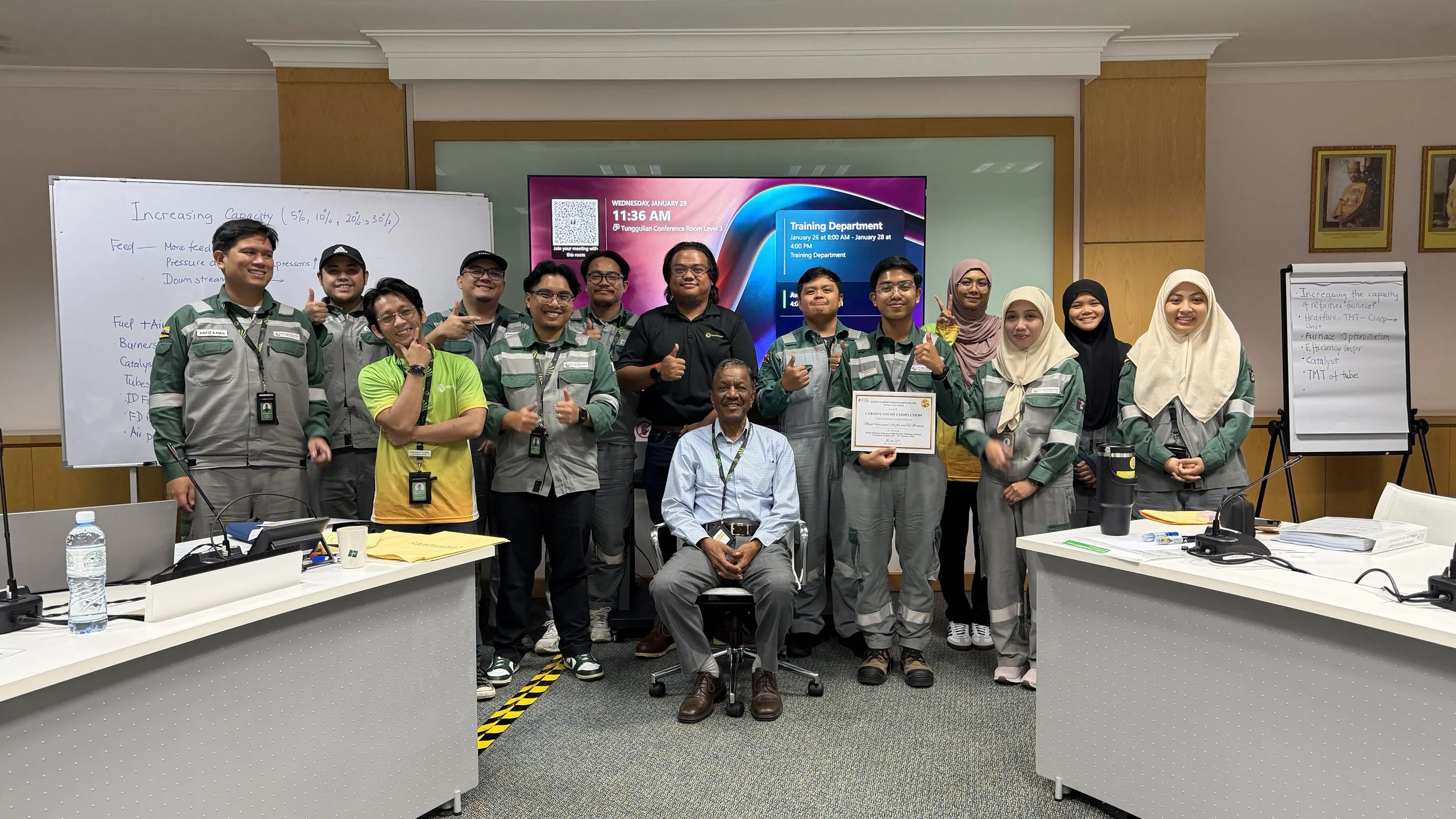
Course Overview
This training is a comprehensive course in fired heater technology for the refining and petrochemical industries. Participants acquire the knowledge and enhance their experience in the design, engineering, inspection, installation, operation, maintenance, and troubleshooting of a heater.
Objective
This training conveys the technology and knowledge of fired heaters by going through the requirements of the API 560 standard, so participants learn API Standard 560 and its real-world application at the same time. We also cover what is missing in API 560 for a better fired heater specification and where it intersects with other governing codes.
Who should attend this course?
Process Engineers
Technical Service Engineers
Inspection, Maintenance, and Reliability Personnel
Production Engineers and Supervisors
Project Engineers and Managers
Instrumentation and Control Engineers
Individuals in Operations roles
Energy and Reliability Coordinators

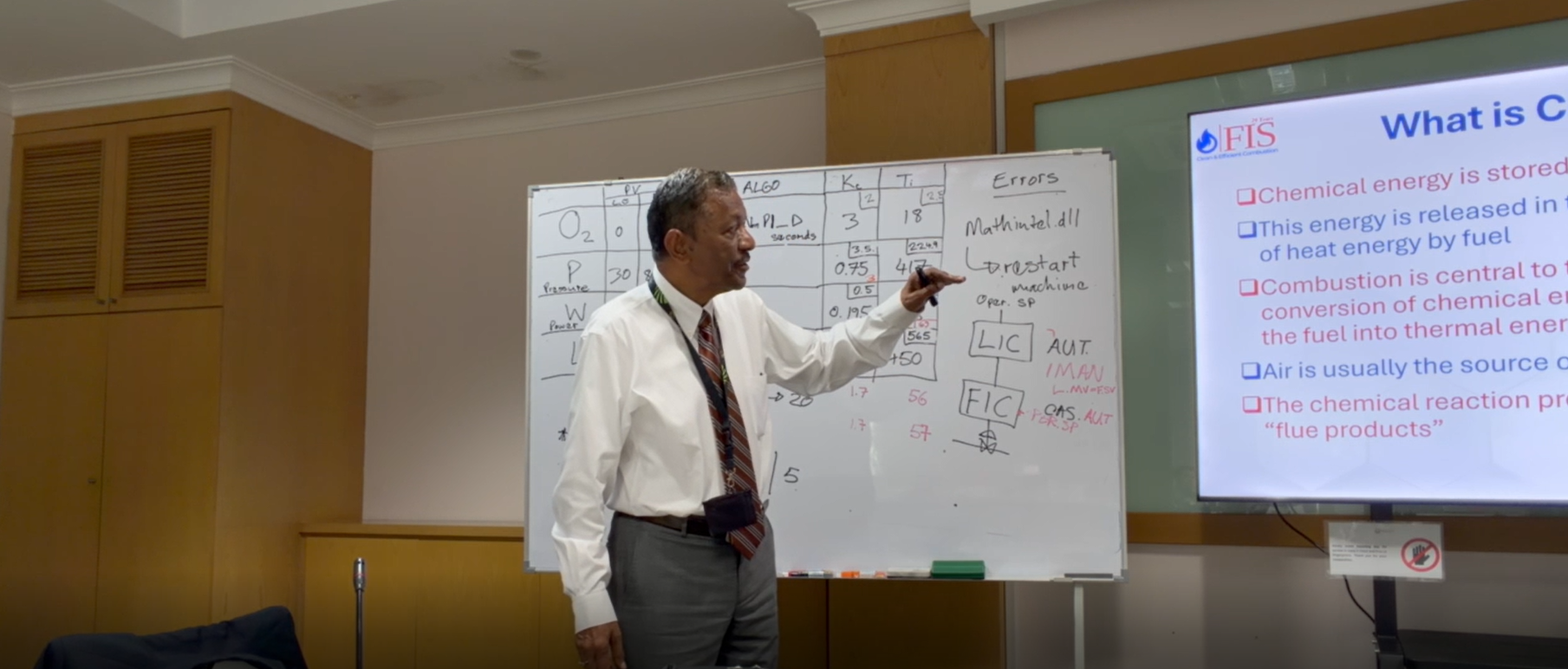
What You’ll Gain
Fired heaters are among the most critical—and most complex—pieces of equipment in refineries and petrochemical plants. Mistakes in operation or maintenance can lead to safety risks, wasted energy, and costly unplanned shutdowns.
This comprehensive training equips participants with the knowledge and practical skills to safely operate, maintain, and troubleshoot fired heaters. Whether you are new to heater operations or looking to sharpen your expertise, this course provides engineer-designed, real-world training you can apply immediately.
HOW TO READ API 560
Scope, Normative References, Terms, Definitions, Symbols and Abbreviations
FUELS AND EFFICIENCY
Combustion Principles
Heat Nomenclature
Fired Heaters in Refining API 560
Design Considerations
STACKS AND DRAFT CONTROL
Definition
Stack Design Parameters
Normal Draft Profiles
Excess Air Control
Stack Damper Operation
Static and Wind-Induced Vibration Design
FIRED HEATER OPERATIONS
Heat Distribution in a Firebox
Instrumentation and Control
Tube-Skin Thermocouples
Safe Startup and Shutdown
Normal Operation
TUBES, HEADERS & PIPING
Tube Materials and Extended Surface
Header Types, Plug Headers, and Return Bends
Piping, Terminals, Manifolds, Allowable Movement, and Load
INSPECTION, EXAMINATION & TESTING
Weld Examination
Castings Examination
Refractory QA/QC, Examination and Testing
HYDROGEN CO-FIRING & LOW CARBON FUEL SWITCHING
Fuel Switching Considerations
Hydrogen Co-Firing Impact on Burners and NOx
Decarbonization Pathways for Existing Heaters
Course Outline API-560
REFRACTORY
Firebrick, Castable, and Ceramic Fiber (AES/RCF) Lining Systems
Anchor Design
Selection Criteria
Heat Loss Calculations
AIR PREHEATING SYSTEM
Air Preheater Types and Selections
Best Practices for Air Preheater Operation
Selecting the Right Fans
HEAT TRANSFER
Conduction, Convection, and Radiation
Radiant Section Design
Convection Design
SOOT BLOWERS, FANS & DRIVERS
Soot Blower Types and Operation
Fan and Driver Selection
BURNERS
Type of Burners
Sizing & Selection
Burner Operation
NOX EMISSIONS & CONTROLS
NOx formation
Low NOx burners
SCR/ SCR Systems
FIRED HEATER REVAMPS
Capacity Increase
Efficiency Improvement
NOx reduction
TUBES SUPPORT & STRUCTURES
Support Types, Loads, and Allowable Stress
Header Boxes, Doors, and Ports
Ladders, Platforms, and Stairways
PROPOSALS, PURCHASER & VENDOR RESPONSIBILITIES
Purchaser and Vendor Responsibilities
Documentation Requirements
Bid Evaluation for Project Engineers and Managers
What past participants have to say about our course:
Valuable Course Material
Every participant will receive a comprehensive course manual, not just slides, but a detailed reference guide that serves as both the course text and a long-term resource for daily operations and troubleshooting.
Operator Training
A complimentary Virtual Operator Training program access worth $$$. It is a flexible, online course designed for refinery engineers and operators.
Special Course Features
Real-Life Case Studies
Our training goes beyond theory. Each session includes real-world case studies drawn from refinery operations, giving participants practical insights into the problems they’ll actually face. With dedicated Q&A time, every participant gets answers they can apply immediately.
Bonus Material
Training on Ethylene Cracking Furnaces
Training on Steam Methane Reformers
Webinar on Changes in API 560
On-Site Operator Training
For plants that want training tailored to their specific needs, we offer on-site operator training. This version of the course is fully customized to your needs, saving both time and travel costs while ensuring maximum relevance for your team.
1:1 Call With the Instructor
A 30-minute follow-up call with Ashutosh Garg within 60 days of the course to work through problems from your own plant.
Course Fee - Standard - $3,499
Early Bird Pricing - $2,899
Bring a colleague along and get a $100 Amazon gift card.
Group Rate- A per-seat discount for 3 or more attendees from the same company registering together - 5% discount
They have sent their Engineers to our School
And it’s now your turn!
With over 25 years of experience, Furnace Improvements Services has been a trusted leader in fired heater training and technology. We’ve successfully conducted over 5+ specialized training programs across refineries and petrochemical plants worldwide—empowering engineers, operators, and maintenance teams to improve heater performance, reliability, and safety.
